Resources and Education Materials


Research Translations & Science Communication
The Connection Between Aneurysms & Ehlers-Danlos Syndromes Aneurysms & Ehlers-Danlos Syndromes
A systematic review published in Clinical Genetics mapped the location of vascular aneurysms across all EDS subtypes, covering 58 years of medical literature. While vEDS carries the greatest risk, vascular complications have been documented across multiple EDS subtypes.


Patient & Family Materials
The Nosology of Ehlers-Danlos syndrome and Hypermobility Spectrum Disorder
A document outlining the long and complicated history of how the Ehlers-Danlos Syndromes have been named and classified. Throughout history, cultural beliefs and medical norms have shaped the politics of nosology. Each year, the field grows and pushes toward better diagnosis, deeper biological understanding, improved care, and clearer classification. We are excited to continue working on these conditions and for the implications of better diagnostics and care for patients.
Advocacy & Awareness
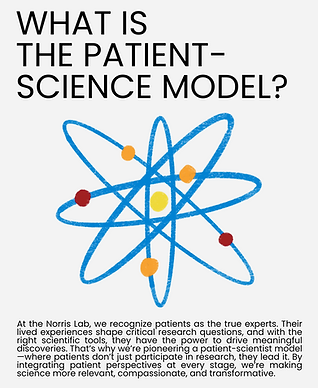
The Patient-Science Model
At the Norris Lab, patients are not just participants—they’re pioneers. In light of this being the first week of our hypermobile EDS Internship Program, let’s talk about patient-science! Integrating patient perspectives, especially in EDS research, leads to more relevant, compassionate, and transformative science.

Patient & Family Materials
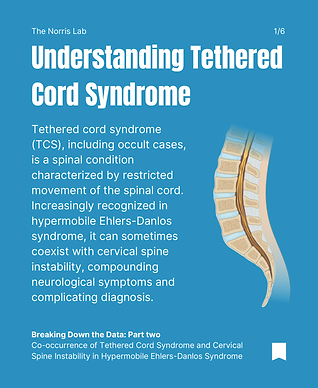
Understanding Tethered Cord Syndrome
Tethered cord syndrome (TCS) is a spinal condition where the cord is abnormally anchored, sometimes without visible signs on imaging. Symptoms may include lower back pain, leg weakness, bladder issues, and more; and in occult cases, standard imaging may appear normal.

Patient & Family Materials
Understanding Craniocervical Instability
Cervical instability is a common yet often overlooked complication in people with hypermobile Ehlers-Danlos syndrome (hEDS) that can affect multiple levels of the cervical spine. This includes the cranio-cervical junction (CCI), the atlantoaxial joint (AAI), and the lower cervical spine (CI). The instability typically develops from ligament laxity or injury, and may occur alongside tethered cord syndrome or Chiari malformation.

Patient & Family Materials
Subtypes of EDS: Major and Minor Criteria based on 2017 Diagnostic Criteria
Ehlers-Danlos syndrome isn’t one diagnosis. There are 14 distinct subtypes and clinical manifestations, each with its own genetic causes and diagnostic criteria. This series walks through the major and minor clinical criteria for each subtype as defined by the 2017 International EDS Classification, plus the genes involved and how the criteria combine to suggest a diagnosis.

Research Translations & Science Communication
Comparison of Two Studies on hypermobile Ehlers-Danlos syndrome
Breaking down the scientific methods of two studies and their results in bite-sized form:
- KLK15 alters connective tissues in hypermobile Ehlers-Danlos syndrome
- Complex Genetics and Regulatory Drivers of Hypermobile Ehlers-Danlos Syndrome: Insights from Genome-Wide Association Study Meta-analysis (Pre-print)

Research Translations & Science Communication
Scientific Review: Environmental Exposures, Epithelial Barrier Dysfunction, and the Evolving Landscape of Allergies and Asthma
This study explores a theory called the epithelial barrier hypothesis and its relation to hyper-mobility disorders like hypermobile Ehlers-Danlos syndrome and hypermobility spectrum disorder.

Research Translations & Science Communication
Breaking Down the Research: KLK15 Alters Connective Tissues in hypermobile Ehlers-Danlos Syndrome
This research translation from our Breaking Down the Research Series highlights one of our recent publications, KLK15 alters connective tissues in hypermobile Ehlers-Danlos syndrome, published in iScience in September 2025.

Research Translations & Science Communication
Orthopaedic Complications & Management in hEDS Patients
A printable education material; New release by Dr. Joseph Eichinger in collaboration with The Norris Lab, titled "Orthopaedic Manifestations in Hypermobile EDS". This large-scale study reveals a median involvement in 11/16 joints, superior outcomes with hEDS‐specific physical therapy, and notable surgical complication rates. This underscores the need for tailored care pathways.

Research Translations & Science Communication
Breaking Down the Research : Phenotypic Clusters & Multimorbidity in Hypermobile Ehlers-Danlos Syndrome
Part of a science communication series designed to translate our Ehlers-Danlos Syndrome and cardiac research into clear, accessible insights for the community. This study, led by PhD candidate Taylor Petrucci in the Norris Lab, explores phenotypic clusters and multimorbidity in over 2,000 individuals with hEDS. We’re committed to making research relevant and directly impactful to the community, connecting evidence to the everyday experiences of the people it’s meant to serve

Research Translations & Science Communication
Breaking Down the Research: Global Survey Study on hEDS and HSD
Defining the clinical scope of hypermobile Ehlers-Danlos syndrome (hEDS) and hypermobility spectrum disorders (HSD) is essential for improving patient prognosis and guiding effective disease management. Affected individuals face substantial care burdens and stressors, compounded by the multisystemic nature of the disease and the persistence of chronic pain. Below is a research translation of the global survey study made to explain our research process and findings


Patient & Family Materials
Guide to Recognizing EDS in Dancers & Gymnasts
A printable pamphlet for dance and gymnast instructors on the signs and symptoms of Ehlers-Danlos syndromes and hypermobility spectrum disorders, so affected students can be recognized earlier and supported sooner. Beyond prompting medical evaluation, recognition can lead to gym accommodations, prevent pain or fatigue from being mistaken for laziness or deconditioning, prevent further injury, and ease the social burden on students.
Patient & Family Materials
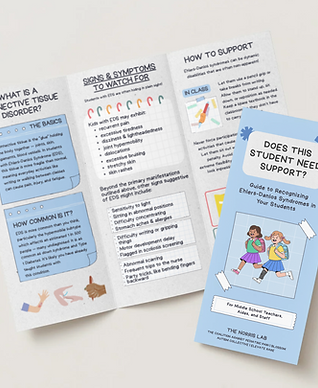
Guide to Recognizing EDS in Students
A printable pamphlet for middle school staff, teachers, nurses, and aides, on the signs and symptoms of Ehlers-Danlos syndromes and hypermobility spectrum disorders, so affected students can be recognized earlier and supported sooner. Beyond prompting medical evaluation, recognition can lead to classroom accommodations, prevent pain or fatigue from being mistaken for behavioral issues, support 504/IEP processes, and ease the social burden on students.

Provider & Clinical Materials
What is hEDS? a Pamphlet for Providers
A printable provider education material; a pamphlet outlining the clinical phenotypes of hEDS, the current diagnostic guidelines, best practices for caring for complex patients according to physicians and researchers, common misconceptions, epidemiological trends, and publications to reference.
hEDS Lunch & Learn
Watch the lecture!
What is a GWAS?
A resource to guide understanding of our recent genome-wide genetic study of hEDS, which was recently published. Titled "Complex Genetics and Regulatory Drivers of Hypermobile Ehlers-Danlos syndrome: Insights from Genome-wide Association Study Meta-analysis", this study uncovered regions of DNA that may have an effect on nerve, immune, and pain pathways.
Proteomic Discoveries in hEDS
A resource to guide understanding of our recent proteomics study of hEDS patients blood, which was recently published. Titled Proteomic discoveries in hypermobile Ehlers–Danlos syndrome reveal insights into disease pathophysiology", this study uncovered underlying immune dysregulation patterns in hEDS patients.